
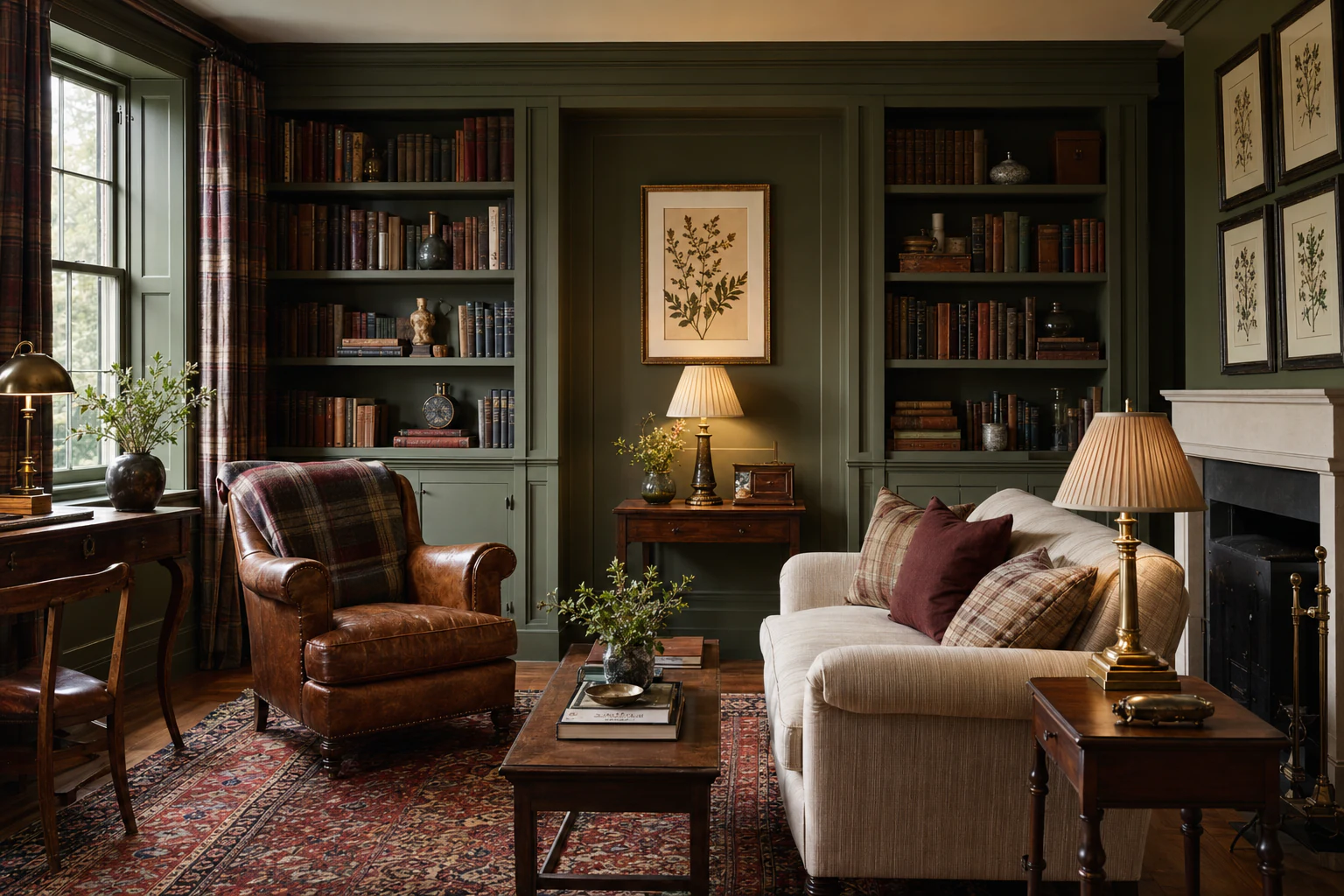
Mixing art styles works when the pieces share one clear thread and differ in another. Repeat a color, frame finish, subject, or mood, then vary the period, medium, or level of formality.
The goal is not to make every piece look related at first glance. It is to create enough connection that the contrast feels deliberate. Start with art you genuinely like, then use scale and placement to give the collection structure.
FOUR EASY PAIRINGS
Contrast the style, connect the feeling.
These combinations work because each pairing balances something familiar with something unexpected.
Vintage landscape + modern abstract
Natural color and visible age ground the room, while the abstract introduces movement and a fresher point of view.
Connect with: one repeated colorBotanical print + photography
Both can feel graphic, but the change in medium keeps the mix from looking like a coordinated set.
Connect with: similar frame profilesOld portrait + simple drawing
A formal portrait gains ease beside a looser line drawing or watercolor with plenty of open space.
Connect with: quiet, limited colorTraditional oil + geometric work
A classic painting and a crisp geometric piece create tension that makes both feel more interesting.
Connect with: balanced scaleLET ONE STYLE LEAD
Use a dominant voice and smaller notes of contrast.
If most of the room is traditional, the artwork does not need to be evenly split between traditional and modern. Let older landscapes, portraits, or botanicals lead, then add one graphic photograph or abstract piece to break the pattern.
In a cleaner room, reverse the balance. Start with modern work and introduce one older piece with visible age or a warmer frame.
MIXING FRAMES
The frames should coordinate, not match.
A room feels collected when the frame finishes vary, but pure randomness can make the art look disconnected. Repeat a few materials and keep the visual weight balanced.
Repeat each finish
If you use brass, black, or dark wood once, bring it back somewhere else in the room.
Vary the width
Mix slimmer profiles with one or two more substantial frames so every piece does not carry equal weight.
Use mats as quiet space
A generous cream or white mat can help a small drawing sit comfortably near a richer oil painting.
AROUND THE ROOM
Spread the mix beyond one wall.
Different art styles often feel more natural when they appear throughout the living room rather than being forced into one large grouping.
Choose one anchor
Give the largest or most important wall one clear focal piece, then let smaller work support it elsewhere.
Change the scale
A large painting, medium pair, and small framed drawing create a better rhythm than several similarly sized rectangles.
Leave a wall quiet
Open space keeps the collection from feeling busy and gives the strongest pieces room to register.
Check sight lines
Stand at the main doorway and make sure neighboring pieces do not compete at the same height and scale.
SHOP THE MIX
Four favorite places to start
Combining vintage, original, and printed art from different sources is one of the easiest ways to avoid a room that feels overly coordinated.
1stDibs
A broad source for older paintings, works on paper, photography, and pieces with history.
Browse art →02Curated original artTappan Collective
Original contemporary work that can bring a fresher note to traditional rooms.
Browse art →03Framed prints & pairingsArtfully Walls
Colorful prints and coordinated frames that make it easy to introduce a different style.
Browse art →04Vintage & independentEtsy
Vintage oils, drawings, prints, and independent art across many periods and budgets.
Browse art →COMMON MISTAKES
What makes mixed art feel accidental
- Using the same size repeatedly.Different scales create hierarchy and keep the walls from feeling like a grid.
- Changing every variable.If style, color, subject, frame, and scale all differ, the pieces may have nothing to connect them.
- Matching every frame.Identical frames can make varied art feel like a purchased set instead of a collection.
- Forcing everything onto one wall.Spread pieces around the room and let one focal work lead.
- Ignoring the room’s mood.Contrast is useful, but the art should still support how you want the space to feel.
- Buying only to fill space.It is better to leave a wall open than add a piece you do not care about.
FREQUENTLY ASKED QUESTIONS
Mixing art styles, answered.
Can you mix modern and traditional art?
Yes. A modern abstract can keep traditional furniture from feeling too expected, while an older landscape or portrait can add depth to a newer room. Repeat one color, frame finish, or mood so the contrast feels intentional.
Do all the frames in a room need to match?
No. A mix of wood, brass, black, and painted frames usually feels more collected. Repeating each finish at least once, or keeping the frame profiles similarly simple, helps the variety feel connected.
How many art styles can you mix in one room?
There is no fixed limit, but two or three clear visual families are easier to balance. Let one style lead, use a second for contrast, and add smaller pieces from a third only when the room still needs depth.
How do you make mismatched art look cohesive?
Create one common thread through color, subject, frame material, scale, or mood. The pieces do not need to share everything. One repeated element is often enough to make the collection feel deliberate.
Should artwork match from room to room?
Artwork throughout a home can share an overall point of view without matching. Repeated frame finishes, favorite colors, or recurring subjects can create continuity while each room keeps its own character.