
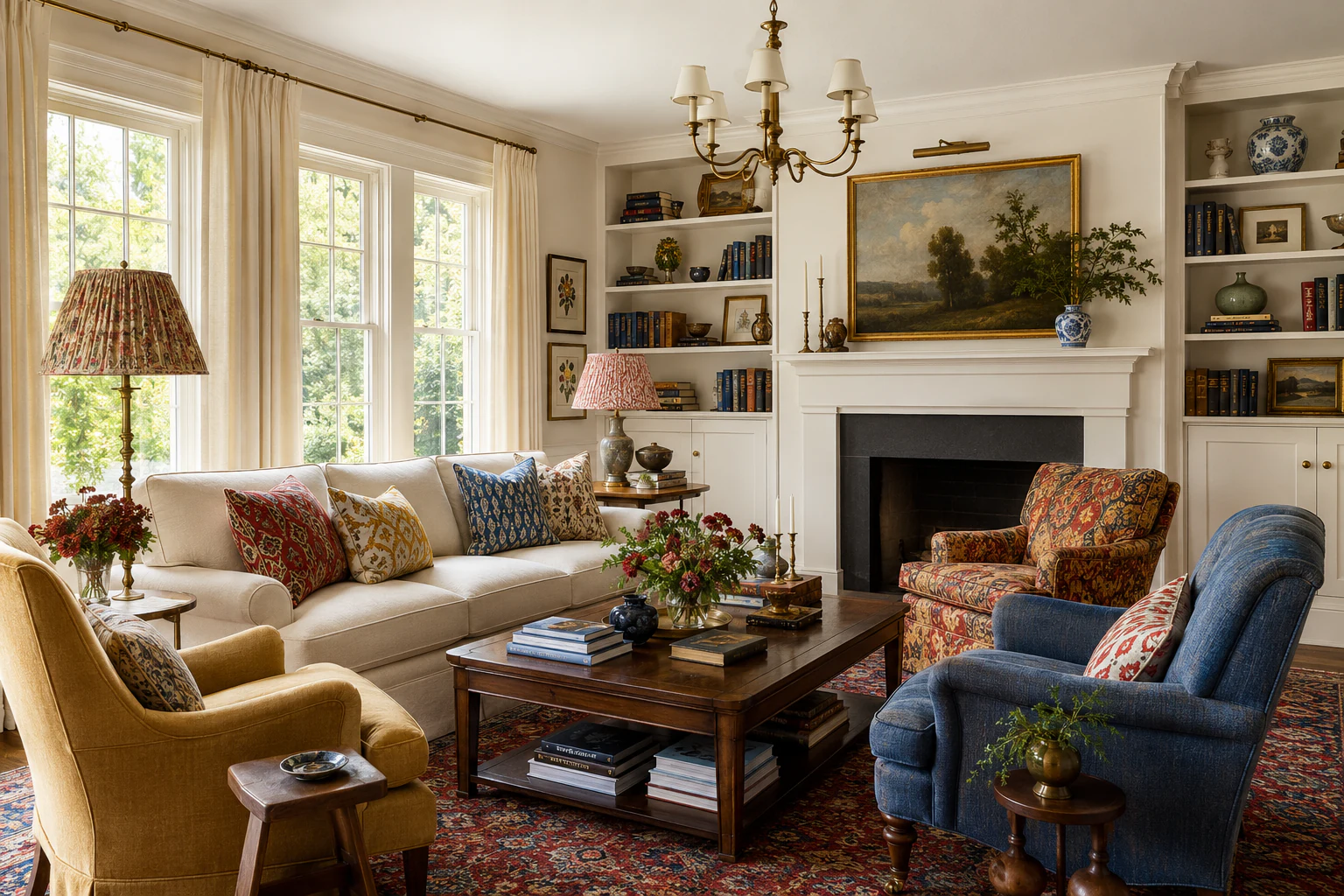
Start with the feeling you want the living room to have, not a rule about which art style belongs with which furniture. The most convincing rooms combine personal taste, the right scale, and just enough connection to the colors and character already in the space.
Artwork should not look as if it came packaged with the sofa. Repeat one or two threads from the room, then allow the piece to add something new: contrast, age, color, quiet, or a point of view.
THE FIVE-STEP FRAMEWORK
Choose art in the right order.
This sequence keeps you from falling in love with a tiny piece for a very large wall or choosing color before deciding what the room needs.
- 01
Define the mood
A soft landscape can settle a busy room. A colorful abstract can wake up quiet upholstery. Choose the emotional job first.
- 02
Identify the focal wall
Begin above the sofa, fireplace, or main console. Not every wall needs art, and a quiet wall can make the focal piece feel more important.
- 03
Set the size range
Measure the available wall and nearby furniture. Use painter’s tape to test the full framed dimensions rather than relying on a product photo.
- 04
Find a connecting thread
Repeat one color from the rug or textiles, a warm wood tone, a brass frame, or the room’s overall sense of age and character.
- 05
Buy what has staying power
Choose the work you would keep even if the sofa changed. Frames are easy to update; the image should be something you want to live with.
CHOOSING A SUBJECT
Let the art change the room’s energy.
There is no single best subject for a living room. Think about what each category contributes.
Landscapes
Quiet depth, natural color, and an easy sense of age. Especially good for traditional rooms that need softness.
Abstracts
Movement and modern contrast. Useful when the furniture and architecture already lean traditional.
Portraits & figures
Personality, history, and a strong focal point. Vintage portraits can make a room feel instantly collected.
Botanicals
Pattern and color without becoming too formal. Try a pair or set when the wall calls for structure.
Photography
A clean graphic note that can keep a layered room from feeling too expected or overly traditional.
Works on paper
Watercolors, drawings, and prints add delicacy and are often easier to layer with existing pieces.
COLOR WITHOUT OVERMATCHING
Repeat a thread, not the entire palette.
Pulling one quieter color from the rug, curtains, or upholstery into the artwork is usually enough to make the piece belong. It does not need to include every color in the room.
If the living room already has a strong palette, art with a little contrast can keep the space from feeling coordinated to the point of being flat. A red accent in a blue room, a deep green in a warm neutral room, or black-and-white photography among florals can provide useful tension.
MATCH THE ART TO THE WALL
Scale and placement finish the decision.
A beautiful piece can still feel wrong if its proportions do not relate to the furniture beneath it.
Choose the right width
Aim for roughly two-thirds to three-quarters of the sofa width.
Read the sizing guide → Above the sofaFind the right height
Keep the bottom edge about 6 to 10 inches above the sofa.
Read the placement guide → Above a consolePlan the full vignette
Balance the art with the table, lamps, and decorative objects.
Read the console guide →A COLLECTED MIX
Different art styles can belong in the same room.
Mixing styles works when the variation feels intentional. A traditional landscape beside a modern abstract can be more interesting than several pieces from the same collection.
Vary the medium
Combine an oil painting with a drawing, photograph, or print so the room develops depth.
Repeat a frame finish
A few recurring wood, brass, or black frames can connect art from different periods.
Balance quiet and bold
Let one or two pieces lead while the others provide softer color, smaller scale, or visual rest.
SHOP THE WALL
Four favorite places to start
Browse with a size range and general mood in mind, but stay open to the piece that gives the room an unexpected point of view.
1stDibs
Original paintings, works on paper, photography, and collectible pieces with history.
Browse art → 02Curated original artTappan Collective
Original work by emerging artists with a clean, editorial presentation.
Browse art → 03Framed prints & pairingsArtfully Walls
Colorful framed prints and curated pairings for traditional and collected rooms.
Browse art → 04Vintage & independentEtsy
Vintage oils, original work, and independent art across many styles and budgets.
Browse art →COMMON MISTAKES
What makes living room art feel generic
- Matching every color.The artwork begins to feel like an accessory instead of a meaningful focal point.
- Buying before measuring.A piece that looks substantial online can disappear above a long sofa.
- Choosing every piece at once.A collected room benefits from art acquired over time and from different sources.
- Filling every wall.Visual rest gives the best artwork more presence.
- Using only one medium.A mix of paintings, prints, drawings, and photography creates more depth.
- Ignoring the frame.The right frame can connect an older piece to a fresher room or give a print more importance.
FREQUENTLY ASKED QUESTIONS
Living room art, answered.
How do I choose artwork for my living room?
Begin with the mood you want the room to have, then choose art that relates to one or two colors already present without matching everything exactly. Check the scale on the wall before buying and prioritize pieces you genuinely want to keep looking at.
Should living room art match the sofa?
The art does not need to match the sofa. Repeating one quieter color from the upholstery, rug, curtains, or pillows can connect the room while allowing the artwork to introduce contrast and personality.
What type of art is best for a living room?
Landscapes, abstracts, portraits, botanicals, photography, and works on paper can all work. The best choice supports the room’s mood and feels personal rather than following one required subject or style.
Can I mix different styles of art in one living room?
Yes. Mix periods and mediums while repeating a thread such as color, frame finish, subject, or overall mood. Variation feels collected when at least one element connects the pieces.
Should every wall in a living room have art?
No. Leaving some walls quiet gives important pieces more presence and prevents the room from feeling visually crowded. Choose the main focal walls first and add smaller work only where it improves the balance.