
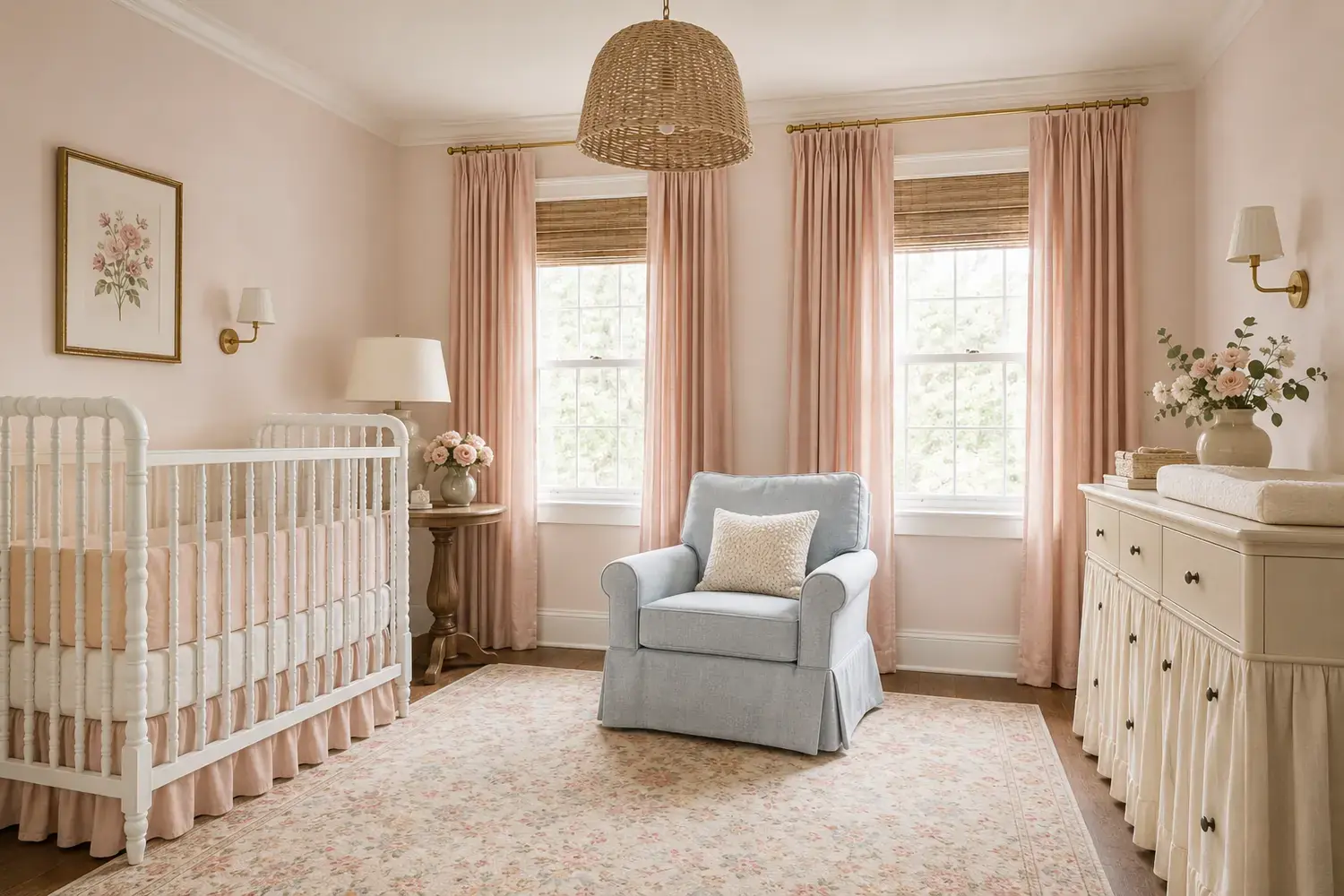
For many average-size nurseries, a 6×9 rug is the safest starting point. Choose a 5×7 when the room is compact or the rug only needs to define one zone; choose an 8×10 when you want most of the crib, dresser, and glider grouping to sit on one generous foundation.
The right nursery rug should make the furniture feel connected without creating awkward, uneven footing. Room dimensions matter, but furniture placement matters just as much. Measure the open floor after deciding where the crib, dresser, and glider will go—not before.
THREE USEFUL LAYOUTS
Where should the rug sit?
These simplified plans show the relationship that matters. Your room may be longer, narrower, or interrupted by a closet, but the same furniture rules still apply.
5×7 RUG
Anchor one clear zone
In a small nursery, center the rug in the usable open space and allow it to reach the front of the glider. It may stop before the crib or tuck beneath it evenly. Do not force every piece onto a rug that is too small.
6×9 RUG
Connect the main pieces
Let the rug extend beneath the crib area and under the front half of the glider. The dresser can remain off the rug or overlap it slightly, as long as it sits level and secure.
8×10 RUG
Create a room-wide foundation
A larger rug can hold the full crib and glider grouping while leaving an intentional floor border. This is often the easiest layout when the room is spacious or the furniture floats away from the walls.
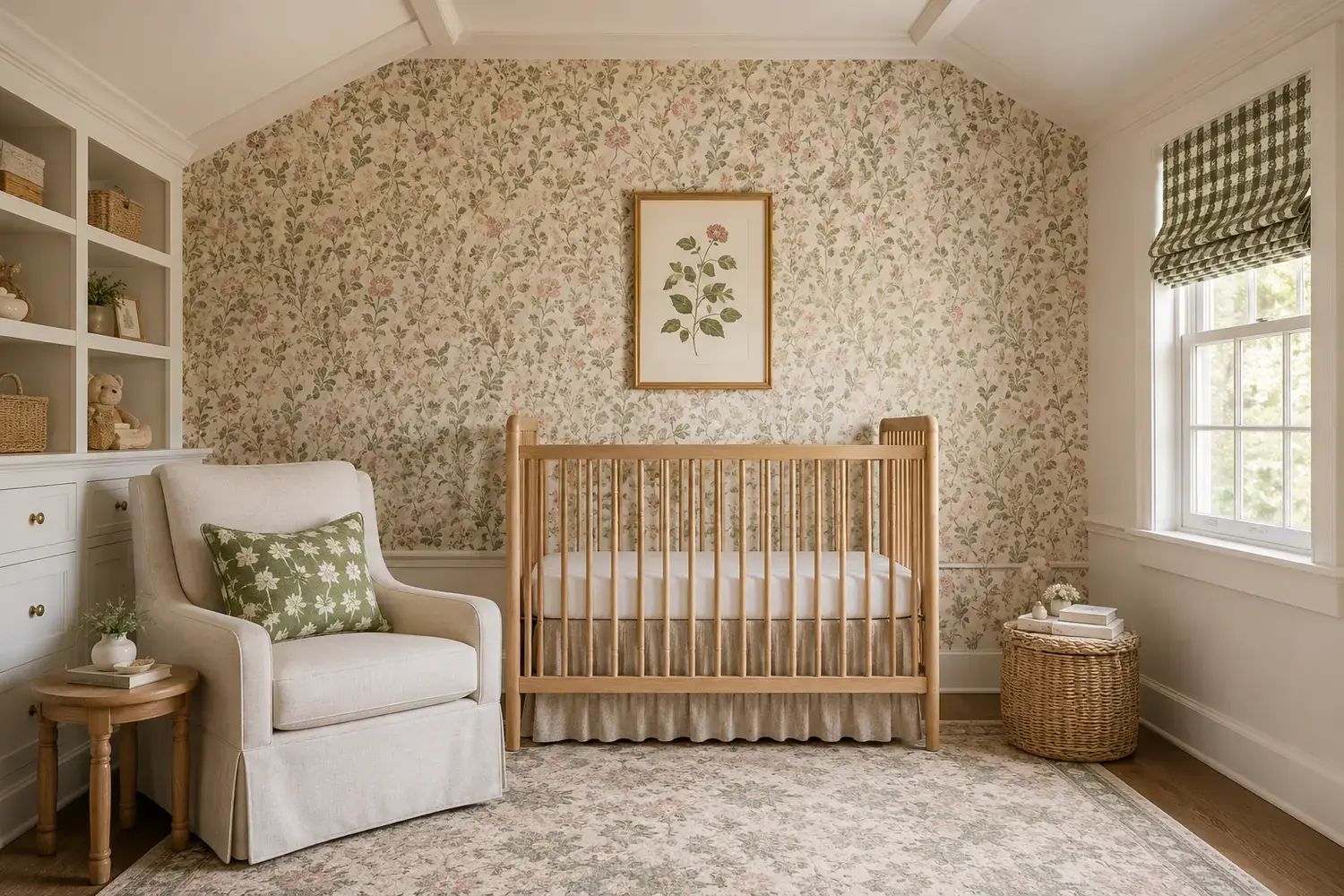
A GOOD VISUAL CHECK
The rug should feel connected to the furniture—not stranded between it.
Stand in the doorway and look at the full room. If the rug appears like a small island surrounded by crib, dresser, and chair legs, size up. If it touches every baseboard or bunches at doors and vents, size down or consider a custom size.
Shop our traditional nursery rug edit →BEFORE YOU ORDER
How to measure for a nursery rug
Place the furniture first
Mark the crib, dresser, glider, door swing, closet access, and floor vents. The rug belongs to the furniture plan, not just the room outline.
Tape the exact rug size
Use painter’s tape to outline 5×7, 6×9, or 8×10 on the floor. View it from the doorway and sit in the glider to check how the edges land underfoot.
Check every edge
Open doors and drawers fully. Make sure corners will not catch a door and that furniture can sit level rather than balancing partly on a thick rug.
About 8 to 18 inches of visible flooring often looks balanced, but it is a guideline—not a requirement. In an older or irregular room, center the rug on the furniture grouping and prioritize clear paths.
MATERIAL MATTERS
Washable, wool, or natural fiber?
Size solves the layout; material determines how the rug lives. For a nursery, look for a surface that feels comfortable underfoot, can be cleaned according to your household’s needs, and works with a non-slip pad approved for both the rug and your flooring.
Washable
Practical for frequent spills and pet traffic. Check the actual washing instructions and whether the largest size fits your machine or requires a commercial washer.
Wool
Soft, resilient, and naturally substantial. Expect some shedding with many new wool rugs and follow the maker’s cleaning guidance.
Natural fiber
Adds warmth and texture, but some weaves can feel rough for floor play. A softer patterned rug can also be layered over a larger jute foundation.
COMMON MISTAKES
What makes a nursery rug look wrong?
- Centering it on the room instead of the furniture. The useful visual center may shift once a dresser, glider, or closet door is considered.
- Leaving one furniture leg on and one off. Uneven placement can look accidental and may make furniture less stable.
- Choosing by rug dimensions alone. Border, fringe, and pattern direction affect how large a rug feels.
- Ignoring the glider’s movement. Test the full rocking or reclining motion and keep the rug edge away from the chair’s working area.
- Skipping a compatible rug pad. The correct pad can help reduce movement and protect the rug and floor; follow both manufacturers’ directions.
FREQUENTLY ASKED QUESTIONS
Nursery rug sizing, answered.
What is the best rug size for a nursery?
A 6 × 9 rug is the most versatile choice for many average-size nurseries. A 5 × 7 can work in a compact room or as a partial rug, while an 8 × 10 is better when you want the crib, dresser, and glider to feel connected in a larger room.
Is a 5 × 7 rug too small for a nursery?
Not always. A 5 × 7 works best in a small nursery when it anchors one zone, such as the crib and glider, instead of floating by itself in the middle of a larger room. Keep its placement intentional and avoid leaving furniture half on and half off.
Should a nursery rug go under the crib?
It can, but it does not have to. With a large rug, placing the entire crib on the rug creates a polished look. With a smaller rug, stop it before the crib or let it extend under the crib evenly; avoid an unstable placement where only one side of the crib sits on the rug.
How much floor should show around a nursery rug?
In many rooms, leaving about 8 to 18 inches of visible floor around the rug creates a balanced border. Older or irregular rooms may need a different margin, so center the rug on the usable furniture zone rather than forcing equal spacing around every wall.
Is a round rug a good choice for a nursery?
A round rug works well in a square room, beneath a central light fixture, or to define a reading or play corner. It is less useful when the goal is to connect several large pieces of furniture across a rectangular room.
Do I need a rug pad in a nursery?
Usually, yes. A pad selected for the rug and flooring can reduce shifting, add cushioning, and help the rug wear more evenly. Follow the rug and flooring manufacturers’ recommendations, especially over hardwood or radiant heat.