

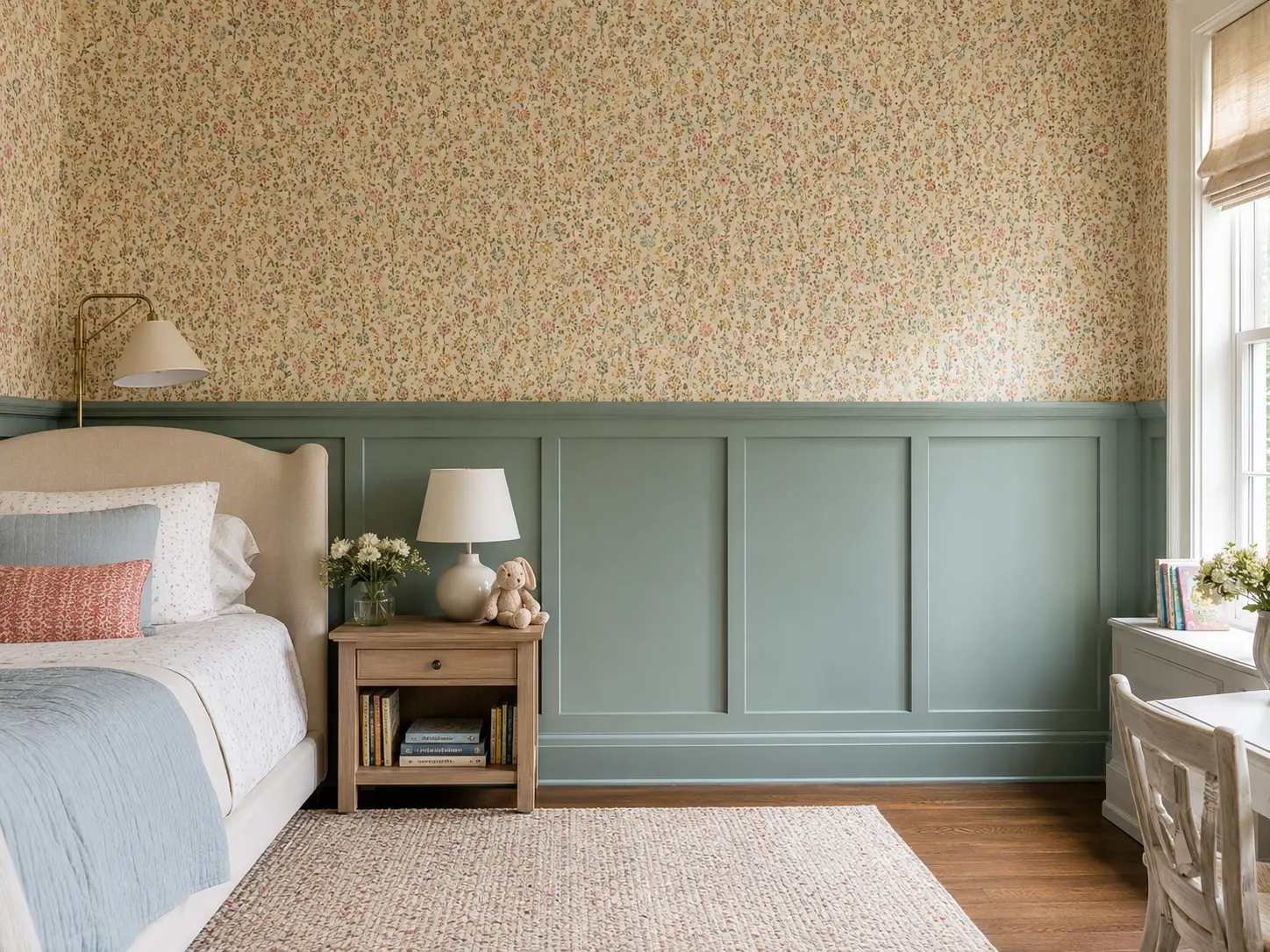
Start wainscoting at roughly one-third of the wall height—about 32 to 36 inches in many rooms with 8-foot ceilings—then adjust for the windows, furniture, and wallpaper pattern. Avoid defaulting to a 50/50 split, which can make the room feel visually divided.
Wallpaper and wainscoting work so well together because each gives the other a boundary. The molding adds structure; the paper brings movement and color. The trick is deciding which element should lead and leaving enough wallpaper visible for its pattern to feel intentional.
THREE PROPORTIONS THAT WORK
Choose the height by the effect you want.
The measurements below are starting points for a typical 8-foot room. Taller ceilings usually allow the same ratios to scale upward.
ABOUT ⅓ OF THE WALL
Classic and wallpaper-forward
This is the most reliable traditional proportion. It leaves a generous field of wallpaper and works especially well with a detailed floral, stripe, or scenic pattern.
ABOUT ⅖ OF THE WALL
Substantial but balanced
A slightly taller treatment can relate well to nursery furniture, dining chairs, or a low windowsill. Keep enough paper above it for at least several clear repeats of the motif.
TALL WAINSCOTING
Architectural and enveloping
Use this deliberately in rooms with generous ceiling height or a strong paneled look. A smaller-scale wallpaper is often easier above a tall rail because the remaining field is shallower.
LET ONE ELEMENT LEAD
More wallpaper needs quieter molding.
When the wallpaper carries a dense botanical or multicolor print, simple recessed panels or restrained board and batten create enough architecture without competing. If the paper is a quiet stripe or texture, the panel profile can carry more detail.
WINDOWS, DOORS & FURNITURE
What should the top rail line up with?
Windowsills, when they are close
A rail that meets a sill can look clean, but only if the sill already falls near your chosen proportion. Do not sacrifice the whole room to match one unusually high or low window.
The room, not one furniture piece
Use crib rails, dressers, and chair backs as visual checks—not fixed rules. Furniture changes; the molding remains. Aim for a line that still looks right in an empty room.
Switches and outlets
Map every plate before the trim is installed. A top rail running through a switch looks accidental; shifting the rail an inch or two may solve the conflict without changing the overall effect.
CHOOSING THE LOWER-WALL COLOR
Pull from the wallpaper, but do not match blindly.
The easiest choice is a soft neutral taken from the wallpaper’s ground. For more contrast, use a secondary leaf, stem, stripe, or outline color. Paint large samples directly beside the paper and view them in morning light, afternoon light, and lamplight.
- Quiet and continuous: match the wainscoting, baseboards, window casing, and doors.
- Collected and colorful: use a muted secondary color from the paper, then repeat it in one or two furnishings.
- Crisp and tailored: choose a restrained contrast and keep the other trim consistent so the room does not become striped with competing outlines.
COMMON MISTAKES
What makes the proportions feel off?
- Splitting the wall exactly in half. Equal fields tend to compete and create a strong horizontal band around the room.
- Choosing the height before choosing the wallpaper. A large motif may need more visible wall area than a small stripe or ditsy floral.
- Forcing every architectural line to meet. Prioritize the proportion seen around the whole room, then solve isolated trim intersections carefully.
- Ignoring the top-rail thickness. The cap itself adds visual height; include the complete molding profile in your taped mockup.
- Using too many competing paint colors. Wallpaper already carries visual information. Keep the trim plan controlled unless contrast is the central design decision.
BEFORE INSTALLATION
Tape it. Photograph it. Live with it.
Run painter’s tape around every wall at the proposed top-rail height. Take photos from each doorway and from seated eye level. Leave it up for at least a day so you can see the line in different light. Then tape a second option two to four inches higher or lower; small shifts are easier to judge when both can be compared.
FREQUENTLY ASKED QUESTIONS
Wallpaper and wainscoting, answered.
How high should wainscoting be with wallpaper?
In an 8-foot room, 32 to 36 inches is a classic starting point for lower wainscoting. A 40- to 48-inch treatment can work in a nursery or room with taller furniture. Test the height on the wall and adjust for windows, switches, furniture, and the wallpaper pattern.
Should wainscoting be one-third of the wall height?
One-third is a useful starting proportion, not a law. It often produces a timeless result because it leaves plenty of wallpaper visible. Architecture and furniture should refine the final height.
Should wainscoting line up with the windowsill?
Only when the sill is already close to the proportion you want. A clean alignment can look intentional, but forcing the rail too high or too low to meet an unusual sill usually creates a worse overall proportion.
Can you use wallpaper above board and batten?
Yes. Keep the board-and-batten spacing and top rail visually quiet enough that they support the wallpaper. Simpler rectangular panels are generally easier to pair with a detailed print than very elaborate trim patterns.
Should the wainscoting match the trim?
Matching the baseboards, casing, and crown creates the most seamless traditional look. A contrasting lower-wall color can also work, but repeat that color elsewhere and compare the undertones with the wallpaper before painting.
Do you install wallpaper or wainscoting first?
The exact installation order depends on the wall condition, molding profile, paper type, and installer. Plan every height and seam first, then follow the wallpaper and trim professionals’ recommended sequence so the paper edge is cleanly finished and removable where needed.